

SHADOWS OVER THE PACIFIC: H-20 VS B-21 AND THE STRATEGIC CONTEST
What the B-21 and H-20 Actually Change for Indo-Pacific Airpower
Working paper — Indo-Pacific series | August 2026

_____ Team InfinIdea
On the night of 21 June 2025, seven B-2 Spirits left Whiteman Air Force Base in Missouri, flew more than thirty hours round trip, and dropped fourteen 30,000-pound GBU-57 bunker-buster bombs on Iran's Fordow and Natanz nuclear sites. It was the first combat use of the Massive Ordnance Penetrator, and by the Pentagon's own account, no shots were fired at the strike package on its way to the target. Whatever one makes of Operation Midnight Hammer politically, it did something to the argument over stealth bombers that a decade of briefing slides never managed: it showed, in public, exactly what a handful of low-observable aircraft can still do against a defended, hardened target more than ten thousand kilometers from home.
That single mission is now doing more analytical work in the Indo-Pacific than almost any other data point available, because it landed in the middle of two bomber programs that were already reshaping how Washington and Beijing think about distance, sanctuary, and reach. The US Air Force's B-21 Raider is in flight test at Edwards Air Force Base, clearing milestones faster than the service itself expected, and certainly fast outpacing the H-20 – B-21’s Chinese rival-in-the-making. China's H-20, first mentioned by name a decade ago, is still platform nobody outside a small circle in Beijing has actually seen fly. Both are meant to do roughly the same job: give their air force a bomber that can go where fighters can't, stay there longer than a missile salvo, and come home after a mission. How close each program actually is to doing that job is, at this point, probably the single most consequential open question in Asian airpower.

This paper works through what a mature H-20, operating opposite a fielded B-21, would mean for the region — not in the breathless “will it start a war” sense, but in the more mundane and more important sense of what it does to basing, alliances, nuclear signaling, and the calculations of planners from Tokyo to Canberra to Dhaka.
The Bomber China Didn't Have
For most of the last two decades, China's long-range strike arm was built around the H-6, a design tracing its lineage to the Soviet Tu-16 of the 1950s. The H-6K and later H-6N added modern engines, a refueling probe, and — in the N variant — a recessed fuselage cradle for an air-launched ballistic missile, giving the PLAAF something closer to a genuine airborne nuclear option. It remains, underneath the upgrades, a 1950s airframe with a large radar cross-section and no realistic chance of penetrating a modern integrated air defense system. Against Guam or the continental United States, the H-6N is nothing more than a stand-off missile truck, and in no way a silent and stealthy penetrator.
That gap — contrary to a capable land leg, a fast-maturing sea leg in the Type 094/096 submarine force, this very genuinely weak air leg — is precisely what the H-20 is supposed to provide. Chinese officials have never hidden the ambition, even while saying almost nothing about the aircraft itself. Ma Xiaotian, then the PLAAF's commander, confirmed the program's existence back in 2016. State media promised the aircraft was “making great progress” in 2018 and hinted at a 2019 unveiling timed to the People's Republic's 70th anniversary; neither happened. A 2021 recruitment video included a few seconds of an unidentified flying-wing shape and nothing else. By March 2024, PLAAF deputy commander Wang Wei was telling reporters at the National People's Congress that the aircraft would be revealed “very soon” — language that, more than two years later, still hasn't been matched by an actual unveiling.
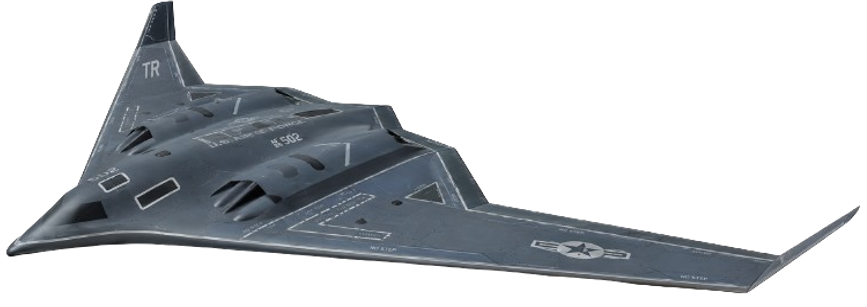
Nevertheless, none of that means the program is fake or dead. Satellite and social-media imagery that began circulating in January 2026 was read by several Western analysts as showing two internal weapons bays on a flying-wing test article — which, if accurate, suggests more progress than the Pentagon's own December 2024 assessment allowed for. Barely two months later, reporting out of Washington described the program as effectively frozen, with analysts openly debating whether Beijing would double down on a stealth bomber at all after watching how badly the B-2's Fordow mission went for Iran's air defenses. Visible progress in the imagery, stalled momentum in the reporting: that tension is the honest state of play heading into the second half of 2026.
Chinese pundits may be thinking of the line that due to high technological requirement to achieve the desired stealth, vis-à-vis, radar cross section (RCS), and China’s potentially perceived delay to attain such high-tech benchmarks – China may be considering instead, relying on intermediate-range ballistic missiles (IRBMs), hypersonic glide vehicles (HGVs) or even heavy attack drones to project power across the first and second island chains rather than waiting for a heavy bomber. China’s rapid expansion of its military inventory with heavy, long-range stealth attack and reconnaissance drones - like the flying-wing GJ-11 Sharp Sword, the high-altitude CH-7, and massive motherships like the Jiutian highlight a shift toward deep-penetration, low-observable unmanned options for regional and strategic power projection.


These unmanned stealth platforms reduce the risk of pilot loss in heavily saturated air defense corridors and offer a more cost-effective near-term force multiplier option for the People's Liberation Army Air Force (PLAAF). They may still cover and threaten most of the South and east China Seas and North Pacific with their own endurance and might.

Rise Of China’s Networked Strategic Stealth Strike Force?
On the other hand, there could be just another possibility, whatever remote - China's next-generation strategic airpower might center on the H-20 stealth bomber operating as a strategic command hub and long-distance stealthy stand-off bomb truck alongside loyal wingman drones—the GJ-11 Sharp Sword, CH-7 Rainbow, and Jiutian SS-UAV. This networked team combines broadband stealth penetration, long-range conventional and nuclear strike capabilities, persistent ISR, and Suppression of Enemy Air Defenses (SEAD). Specially, the Jiutian’s capability to act as “Drone Mothership” may further facilitate afore mentioned complementary roles. Their combined Illustrated combat radii project operational reach across key regional hubs, including Okinawa, Darwin, and Diego Garcia. Designated potential domination areas span the South and East China Seas, Indian Ocean, and Western Pacific, expanding anti-access/area denial (A2/AD) dominance across the Indo-Pacific. Such an arrangement may be compared to the B-21’s Collaborative Combat Aircraft (CCA) capability – where these platforms may compliment the H-20, being part of the combined strike package – and hence the perceived delay in the fielding of the H-20 for the PLAAF. If the H-20 remains within the relative safety of the Chinese Mainland – aided by shore based long range air defence coverage and fighter cover, the afore mentioned long range unmanned systems may form the longer arm/tentacle of the system, forward deployed in the fast-growing Chinese artificial islands in the South China Sea/Nine-dash Line area.
Such a combination could address much of the perceived stealth deficiency compared to the B-21 and afford similar B-21 like CCA capability.

Meanwhile, in Palmdale
Set the H-20 programme against the B-21 in the same window. The aircraft made its public debut in December 2022 and first flew on 10 November 2023 out of Air Force Plant 42 in Palmdale — fast, for a clean-sheet bomber. A second test aircraft joined the Combined Test Force at Edwards Air Force Base in September 2025, and the pace picked up from there. On 14 April 2026 the Raider completed its first aerial refueling trials behind a KC-135 — a milestone that sounds routine but matters enormously for a bomber whose entire value proposition rests on very long-range missions across the Pacific. Three weeks later, Northrop Grumman announced that a developmental test campaign originally scoped for 180 days had been finished in 73, a compression the company attributed less to flying faster than to unusually low rework between sorties: the jet isn't breaking as often as expected, and the mission software isn't being rewritten as often as expected either.
Then, on 11 June 2026, the Air Force did something it says it has never done this early in a bomber program: it put an operational test pilot in the cockpit alongside a developmental test pilot, collapsing a distinction between “does it fly” and “can it fight” that has traditionally added years to a program's timeline. Gen. Dale White, who oversees the Pentagon's most critical weapons programs, called it evidence of a faster acquisition mindset taking hold across the service. Whatever survives of that language in five years, the underlying fact is straightforward: fewer than three years after first flight, the Air Force is testing the B-21 as a combat system, not merely an airframe.
Money followed the momentum. In February 2026 the US Air Force and Northrop Grumman agreed to redirect $4.5 billion in already-appropriated funding toward a 25 percent increase in annual production capacity, aimed squarely at getting more aircraft to Ellsworth Air Force Base ahead of a planned 2027 initial operational capability. The Air Force's official minimum inventory objective remains 100 aircraft at roughly $692 million apiece in 2022 dollars; several outlets now report an internal planning figure closer to 145, which would let the type eventually absorb both the retiring B-1B fleet and much of the aging B-2 force.

Attribute | B-21 Raider | H-20 (assessed / estimated) |
Manufacturer / lead | Northrop Grumman — USAF | Xi'an Aircraft Industrial Corp — PLAAF |
Status, mid-2026 | Low-rate initial production; combined DT/OT flight testing, Edwards AFB | Developmental; no confirmed flight, imagery suggests prototype testing |
First public disclosure | December 2022, Palmdale rollout | 2016 (program existence confirmed by PLAAF) |
First flight | 10 November 2023 | Unconfirmed |
Configuration | Flying-wing, subsonic, broadband low-observable | Flying-wing (assessed from imagery), subsonic |
Unrefueled range | ~9,000–11,000 km — unofficial estimate | Often cited >10,000–12,000 km — unofficial estimate |
Armament (assessed) | JASSM-ER/XR, LRASM, B61-12, GBU-57 MOP, CCA control | YJ-100/CJ-20-class cruise missiles; possible ALBM/HGV |
Planned / estimated fleet | Minimum 100; ~145 reported internal planning figure | No official production figures released |
Unit cost | ~$692M, base-year 2022 dollars | Unknown |
Primary role | Dual-capable penetrating strike; C4ISR / CCA-swarm node | Dual-capable strike; extends PLAAF beyond H-6 limits |

Figure 2. Range estimates for all four aircraft, with confirmed specs shown solid and unofficial estimates shown hatched.

What a Stealth Bomber Actually Buys You
It's worth pausing on why any of these matters beyond fleet accounting. The Indo-Pacific's traditional advantage for a defender — sheer size — has eroded steadily as missile ranges grew, but a stealthy, long-range bomber erodes it in a different and arguably more dangerous way. A ballistic missile has a fixed trajectory and, once launched, an unambiguous signature; an early-warning system can see it coming and infer intent from where it's headed. A penetrating bomber can loiter, divert, or be recalled mid-mission, and — worse for whoever is trying to interpret it — can carry either a conventional or a nuclear payload with no external sign of which. That ambiguity is a feature for the side flying it and a genuine problem for crisis stability on the receiving end, because it compresses the time available to work out what's actually inbound.
For China, a functioning H-20 would supply something the missile force alone cannot: a recallable, flexible strike option reaching past the Second Island Chain, or even beyond without depending on any single, findable launch site. However, it remains to be seen when (or if) it’s inception actually materializes – or the H-20 is at least, temporarily alternated by China’s growingly capable long range stealth unmanned platforms, which might even complement the H-20 in terms of CCA concept working in tandem. For the United States, the B-21's core selling point is close to the mirror image — the ability to hold targets at risk deep inside China's own air-defense envelope without staging fighters at forward bases that satellite imagery and a DF-26 can locate in minutes. Neither aircraft, on its own, decides who wins a war. What both change is the geography of where that war's opening moves can plausibly happen, and how much warning either side gets before they do.
The Island Chains, Concretely
Strip away the doctrine language and the geography isn't complicated. The First Island Chain runs from the Kurils through Japan, Taiwan, and the northern Philippines down to Borneo — the belt of territory inside which China has spent two decades building the densest integrated air-defense and precision-strike network anywhere on earth. The Second Island Chain, anchored on Guam's Andersen Air Force Base and the wider Mariana Islands, is where American power projection has traditionally staged from once the first chain got too dangerous to operate inside. A Third Island Chain, running roughly through Hawaii, is where the rear-area basing lives.
A mature H-20 doesn't need to fly through the First Island Chain's SAM coverage to matter; it needs to fly around or above it, using stand-off weapons to hold Guam, Diego Garcia, or an approaching carrier strike group at risk from ranges that put the aircraft itself outside most fighter intercept envelopes. That's a genuinely new problem for the Second Island Chain, which has spent the last decade being upgraded on the assumption that it sat safely behind the reach of shorter-legged Chinese aircraft. The B-21's answer runs the other direction: rather than needing forward fighter bases inside the First Island Chain — the ones a DF-21D or DF-26 can already threaten — it can fly from Whiteman, from Ellsworth once IOC arrives, or from further-back allied territory, and still reach deep targets without staging closer in.
That's why RAAF Base Tindal, a remote strip south of Darwin, keeps coming up in this conversation. Tindal already hosts rotational deployments of up to six US B-52s under an infrastructure program that predates the B-21 by several years, and Australian officials — including a defense minister who has publicly acknowledged the idea is under review — have spent the past few years openly discussing whether Australia should simply buy its own B-21s rather than continue leasing distance from American ones. Whether or not that purchase happens, Tindal's redevelopment previews what “dispersal” will look like for both air forces: fewer aircraft sitting on a handful of obvious runways, more able to operate from remote strips that a first strike would have to find and hit one at a time.

The Nuclear Wrinkle
There's a nuclear dimension here that's easy to lose in the basing and range discussion, and it deserves to be stated plainly: if the H-20 ever reaches real operational status, it completes something China has been building toward for years — a genuine nuclear triad, with a survivable air leg that doesn't rely on the H-6N's limited range and near-total vulnerability to modern air defense. The United States has lived with a three-legged nuclear posture since the Cold War, and its warning systems and arms-control thinking largely assume the other side has one too, even where it doesn't quite yet. An operational H-20 would close that asymmetry — not because the aircraft is a decisive weapon on its own, but because it removes one of the few remaining structural gaps between the two countries' strategic postures.
The B-21 sits on the American side of the same coin. It's explicitly built to carry both conventional and nuclear payloads, and it's a central piece of the wider US nuclear modernization effort running alongside the Sentinel ICBM and Columbia-class submarine programs. What both bombers share is the property that makes airpower different from missiles in a crisis: each can be surged visibly as a signal, held on alert as a deterrent, or turned around mid-flight if tensions ease — flexibility a missile silo isn't built for. That flexibility cuts two ways: genuinely useful for de-escalation, since a bomber can come home, but also a source of “use it or lose it” pressure if either side worries its bombers will be caught on the ground by a first strike, which is exactly why dispersed and hardened basing keeps surfacing throughout this paper as more than a logistics footnote.
Who Has to Adjust
The countries that actually have to live with this shift are not, for the most part, Washington or Beijing. Japan is already hardening runways and shelters across the Ryukyu chain, the string of islands running from Kyushu down toward Taiwan, on the assumption that any Taiwan contingency puts its own southwestern airbases inside the first wave of a Chinese strike. Those bases matter to this story less as forward launch points for B-21s — nobody expects Washington to permanently station a stealth-bomber fleet on Japanese soil — and more as emergency recovery and refueling nodes, and as hosts for the passive, long-wavelength radar arrays that offer the best public hope of actually detecting a flying-wing aircraft that AESA-band radar mostly can't see.
Australia's role, sketched above through Tindal, is becoming that of a genuine rear-area operating base, and AUKUS's often-overlooked “Pillar II” — the technology-sharing half of the agreement that gets far less attention than the submarines — is where sensor and cyber integration relevant to bomber operations is quietly being built out. India's position is different in kind, not degree. New Delhi isn't part of the alliance architecture built around the first and second island chains, but a Chinese bomber with genuine intercontinental reach changes the Indian Ocean calculus regardless, because Beijing's reach into that ocean would no longer depend on basing access it doesn't reliably have — a foothold in the Horn of Africa, an understanding with Myanmar, a friendly port. That's part of why India's naval planners have spent recent years upgrading the Andaman and Nicobar Command's surveillance and airbase infrastructure: the same argument that applies to Guam applies just as much to India's eastern approaches. The Philippines faces a narrower but sharper version of the same problem: it hosts the rotational US access any Taiwan or South China Sea contingency would lean on hardest, making it simultaneously the most useful and the most exposed piece of the entire American basing picture in the region.
Location | What's changing | Why it matters |
Japan — Ryukyu chain, Kadena AB | Runway and shelter hardening; passive long-wavelength radar buildout | Southwestern islands sit inside the first wave of any Taiwan scenario; best current hope for detecting a flying-wing aircraft |
Australia — RAAF Tindal | B-52 rotational hosting since 2022; Australian B-21 purchase or basing under policy review | Distance from China makes it a natural dispersal node; AUKUS Pillar II sensor-sharing underpins the relationship |
Guam — Andersen AFB | Continued THAAD / Aegis Ashore missile-defense buildout | Long treated as a safely rear Second Island Chain hub; a mature H-20 puts it inside credible stand-off strike range for the first time |
India — Andaman & Nicobar Command | Surveillance and airbase infrastructure upgrades | Chinese bomber reach into the Indian Ocean would no longer depend on foreign basing access Beijing doesn't reliably have |
Philippines — EDCA rotational sites | Expanded US rotational access | Hosts the access any Taiwan or South China Sea contingency leans on hardest — and is the most exposed link in the chain |
Two Places This Gets Tested
If any of this is tested in the next decade, Taiwan is where it happens first. In a strait crisis, an operational H-20 would give the PLAAF a way to threaten Guam and approaching US carrier groups from ranges that keep the bomber itself outside most fighter intercept envelopes, pushing American naval assets further east and buying the mainland time during exactly the window — the first 48 to 72 hours — when a cross-strait invasion force is most exposed. A B-21, flying the other direction from distributed rear bases rather than forward fighter strips, would give Washington a way to hit amphibious staging areas and the sensor and command nodes that make China's anti-access network function, without needing the kind of forward air base a saturation missile strike could take off the board on day one.
The South China Sea version of this problem is slower and less dramatic but arguably more persistent. China's militarized reefs — Fiery Cross, Subi, Mischief — already host radar, SAM batteries, and runways; they're also fixed, known, and therefore exactly the kind of hardened point target a stand-in strike from a stealth platform is built to dismantle, opening corridors for less exquisite aircraft and naval forces to operate through afterward. An operational H-20, meanwhile, wouldn't need to strike anything in a South China Sea contingency short of outright war — its job there is closer to persistent, hard-to-track surveillance and stand-off sea denial over the Malacca and Sunda approaches, reinforcing China's existing claims with an asset that patrol aircraft struggle to find and fighters struggle to intercept.
The Part Nobody Puts in the Brochure
Strip away the range estimates and the stealth coatings, and the variable most likely to decide this competition is the least glamorous one: how many of these aircraft each side can build, fly, and maintain at once. The Air Force's own numbers are the most concrete data point in this paper — a minimum objective of 100 B-21s at roughly $692 million each in 2022 dollars, a production line getting a 25 percent capacity boost on the back of $4.5 billion in redirected funding, and multiple outlets reporting an internal 145-aircraft planning figure that would let the type absorb the B-1B's retirement and much of the B-2's eventual replacement. China has released no comparable figures for the H-20, for the obvious reason that it hasn't confirmed the aircraft is even in low-rate production. Unit cost, fleet size, sustainment infrastructure, the maintenance burden of low-observable coatings — all of it remains either classified or genuinely unknown outside Beijing.
That asymmetry in information is itself a kind of answer. A program confident in its production numbers tends to publish them, if only to signal capability to rivals and reassure the legislators writing the checks; a program still fighting internal engineering battles tends to stay quiet and let state media supply adjectives instead of dates. Nothing about that guarantees the H-20 fails. It does mean that, as of mid-2026, the two programs aren't just at different points on the same curve — they're being managed, and talked about, in completely different ways.

Where This Leaves Smaller Regional Actors
None of this is a story that only involves great powers. A more contested Indo-Pacific air environment raises shipping-insurance premiums, complicates sea-lane security through the Malacca and Sunda straits, and puts diplomatic pressure on states that would strongly prefer not to choose sides. Bangladesh is a useful example precisely because it has no realistic path to fielding anything like these platforms and no strategic interest in trying: its exposure runs through trade routes, energy costs, and the secondary effects of a more militarized regional airspace, rather than through any prospect of participating directly. The sensible response isn't to mirror great-power capability, which would be both wasteful and provocative, but to invest in maritime-domain awareness, diversify economic and diplomatic relationships so no single crisis can hold the whole economy hostage, and treat strategic autonomy as a genuine policy goal rather than a rhetorical one. The same logic, adjusted for local specifics, applies to most of the small and middle powers watching this competition from outside the alliance structures built around it.
Where This Leaves the Rest of Us
Two stealth bombers — one flying and accelerating, one still mostly a set of assessments and satellite photographs — are not going to decide the future of the Indo-Pacific by themselves. But they are already changing the questions regional planners have to answer. Distance used to be a strategy; it's now a resource that has to be actively managed, through dispersal, hardened basing, and sensor networks built to see through stealth rather than around it. Nuclear stability used to rest on two legs of the Chinese triad being obviously weaker than the third; that gap is closing, at least as an ambition, whether or not the H-20 ever flies a combat sortie. And the actual outcome of this competition may hinge less on whichever aircraft has the longer range on a classified spec sheet, and more on which country can build, crew, and sustain a fleet of them at scale — a question the United States has, for now, answered in public, and China has not answered at all.
Sources & Further Reading
National Security Journal — “China's New H-20 Strategic Stealth Bomber Is Becoming a Giant Headache”
Also drawn on: U.S. Air Force B-21 Raider fact sheet; CSIS ChinaPower and Missile Defense Project; Federation of American Scientists nuclear-forces assessments; Lowy Institute commentary on Australian basing; RAND Corporation long-range strike analysis; The Drive / TWZ, SlashGear, and AOL reporting on the H-20's disclosure history.
Note: neither the B-21's nor the H-20's official range, payload, or unit-cost figures beyond those cited above have been released by either government. Figures marked “estimated” or “assessed” throughout this paper are open-source analyst projections, not confirmed specifications, and should be treated accordingly in any downstream use.


Comments