
F-117 Nighthawk – The Forgotten Knight?
- infinidea2024
- Feb 18, 2025
- 3 min read
Updated: Jan 8

Hero of the first Gulf War (1990/91) but, shot down on 27 March 1999, during the NATO bombing of Yugoslavia, the World’s First Operational Stealth Aircraft, the F-117 Nighthawk was developed in response to the urgent US national requirement for a jet fighter that could operate completely undetected by the enemy. By the Skunk Works style, it was indeed developed rapidly and with complete secrecy. It was officially retired in 2008. According to “The Aviationist”, the Nighthawks were known to continue to fly this day, albeit unofficially, from Tonopah Test Range (TTR) airfield, which was neither confirmed nor denied by the US Air Force.

In September 2022 the Air Force Test Center published a Request For Information (RFI) about a possible 10-year contract for maintenance and logistics support services for the F-117A fleet at the TTR airfield, acknowledging that the U.S. Air Force is willing to keep the airframe airworthy at least until 2034. That means expected infrastructure remains in place to keep this legacy airframe airworthy until then…but, for what purpose?
Some of the major drawbacks are the F-117’s lack of air-to-air defenses and sensors that would make it vulnerable in a fight with peer or near-peer adversaries. It’s been surpassed technologically by any number of USAF aircraft to the point where it is possibly unworthy of deploying because there are more modern assets that can do what the F-117 does in a much better way. With a payload of only 4000 pounds of bombs, no anti-air capability, and restrictions on the types of weapons that can be carried, a mere Mach 0.92 speed, service ceiling of 45,000 feet, range of 1,720 km - the F-117 is very, very deficient compared to the F-35. Or, frankly, even well-employed non-stealth aircraft.
Nevertheless, the F-117 could still be utilized in today's battlefield primarily as a training tool for pilots and ground crews due to its pioneering stealth technology, allowing them to practice tactics and procedures for operating in heavily defended airspace without risking newer, active-duty stealth aircraft; additionally, it could be used as a test-bed to evaluate new stealth detection systems by acting as a known, low-observable target. Interestingly, the U.S. Air Force floated plans to complete the certification of the F-117s with the KC-46 mid-air refueling aircraft by the end of March 2024. But, for what purpose an aircraft with rudimentary capabilities needs to be AA refueling certified? A training radius may not require such capabilities. A good assertion may its employment for Cruise Missile Target simulation.
Body armor has not made bullets obsolete. Cargo aircrafts did not render sea-going freighters outdated. Brakes remain important than ever even with the Seatbelts and airbags made their way to the vehicles. Surface combatants still remain relevant even after submarines became a tremendous naval punch. The turbo-prop Super Tucano and the F-22 Raptor have relevance in their own respective domains. The legacy platforms like the F-16, F-18, MiG-29 and even the legendary MiG-21 and F-5 Tigers saw upgradation and active service even today. Why not the F-117? Its stealth properties still outmatch many, that include the much vaunted and very latest F-35.
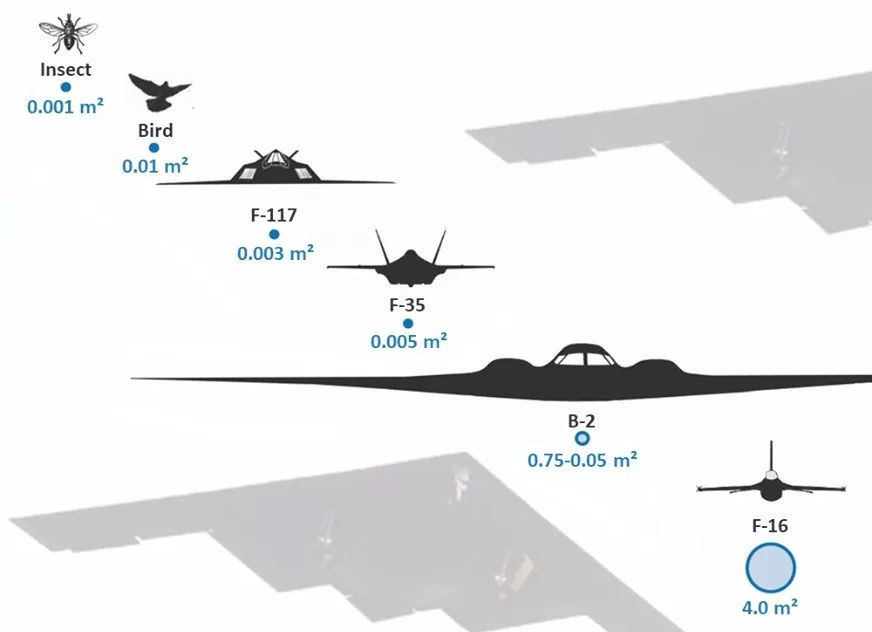
Theoretically, with minimal upgrades to its engines, and adding up upgraded avionics, can these black ghosts be still found shadowing and neutralizing its preys against less dense air defended targets?
An old platform/ system may not always be considered obsolete. Rather, a prudent and judicious utilization of such resources may bring invaluable dividends.
So, can we see these Black Ghosts flying in anger ever again? Only time can say. You may not perhaps totally rule out the possibilities…


Comments