

A Look At The Shkval Super-cavitating Torpedo
- infinidea2024
- Aug 17, 2024
- 1 min read
Updated: Jan 8
The VA-111 Shkval and its offsprings are super-cavitating torpedoes formerly developed by the Former Soviet Union (FSU). They are allegedly capable of speeds in exceeding 200 knots (370 km/h or 230 miles/h). The Shkval rocket torpedo has a remarkable character. Its unbelievable speed, innovative design and strident appearances draw attention. Designed to equip Russian submarines, it is unlike anything in Western service. And Iran allegedly possesses this torpedo.
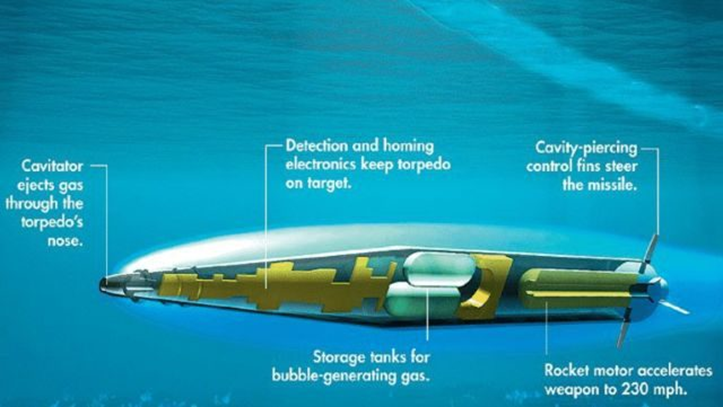
Shkval uses super-cavitation technology. Here it generates a bubble of gas from the nose, gets encapsulated within it and thrusts forward. This method of underwater movement reduces friction allowing the torpedo to travel about three times faster than a conventional torpedo. The trade-off is agility, since it cannot turn sharply, in case it slips outside its encapsulating gas bubble. As such it is often viewed as a defensive weapon. However, it can possibly be used with greater effectiveness in the close confines of the Strait of Hormuz by both Iran and the Russian Navy, against civil and military vessels equally with greater ease. The enormous speed of the torpedo would possibly restrict the target vessel/ submarine’s ability to undertake quick evasive maneuver. Iran allegedly tested its “Hoot” supercavitating torpedo (an alleged Iranian copy of the Shkval) in the Strait of Hormuz in 2017, adding another stratum of difficulty to the existing scenario. A salvo of such torpedoes with a salvo of anti-ship missiles may truly offer a killer blow to even a capital ship.


Comments